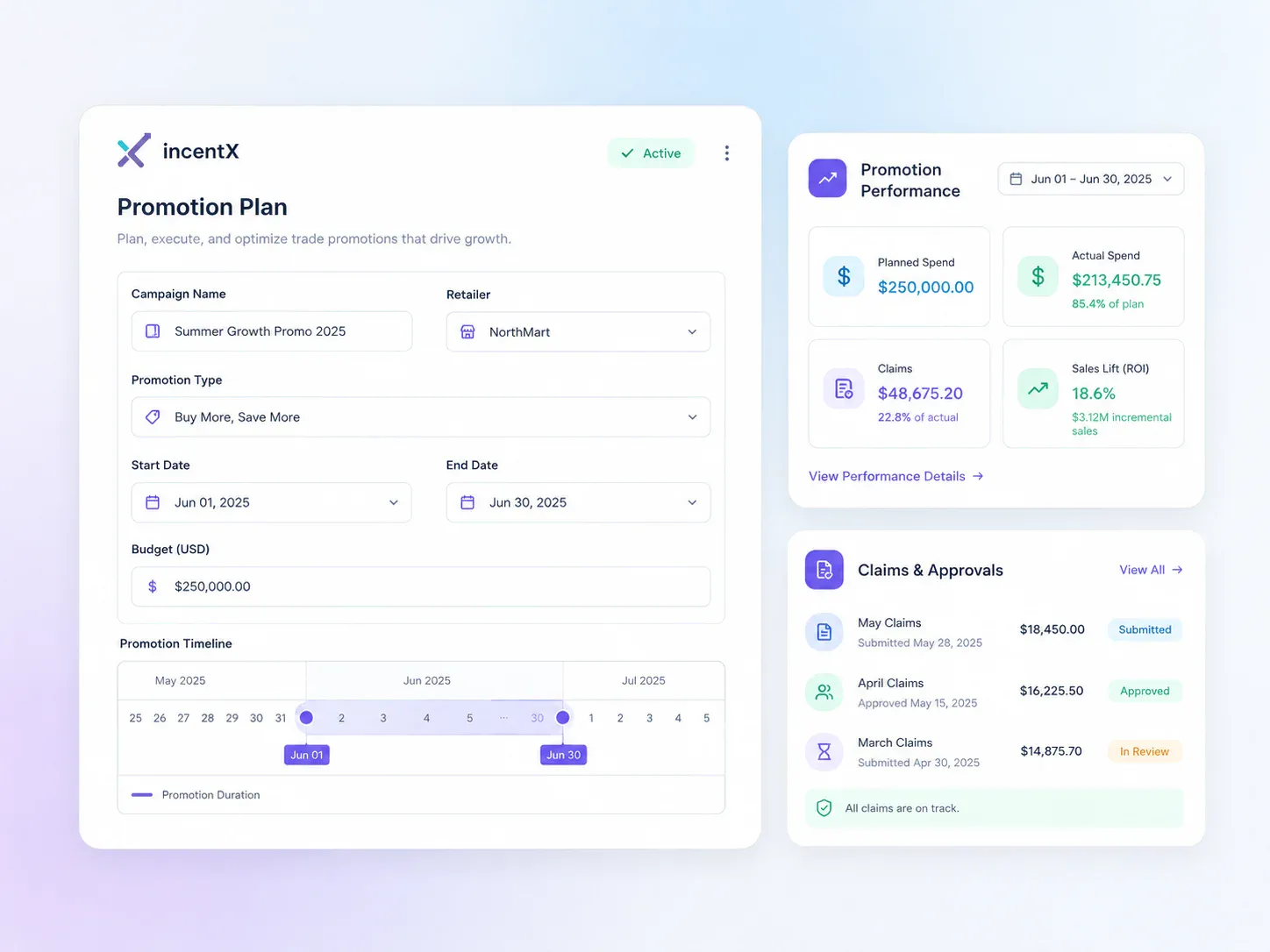
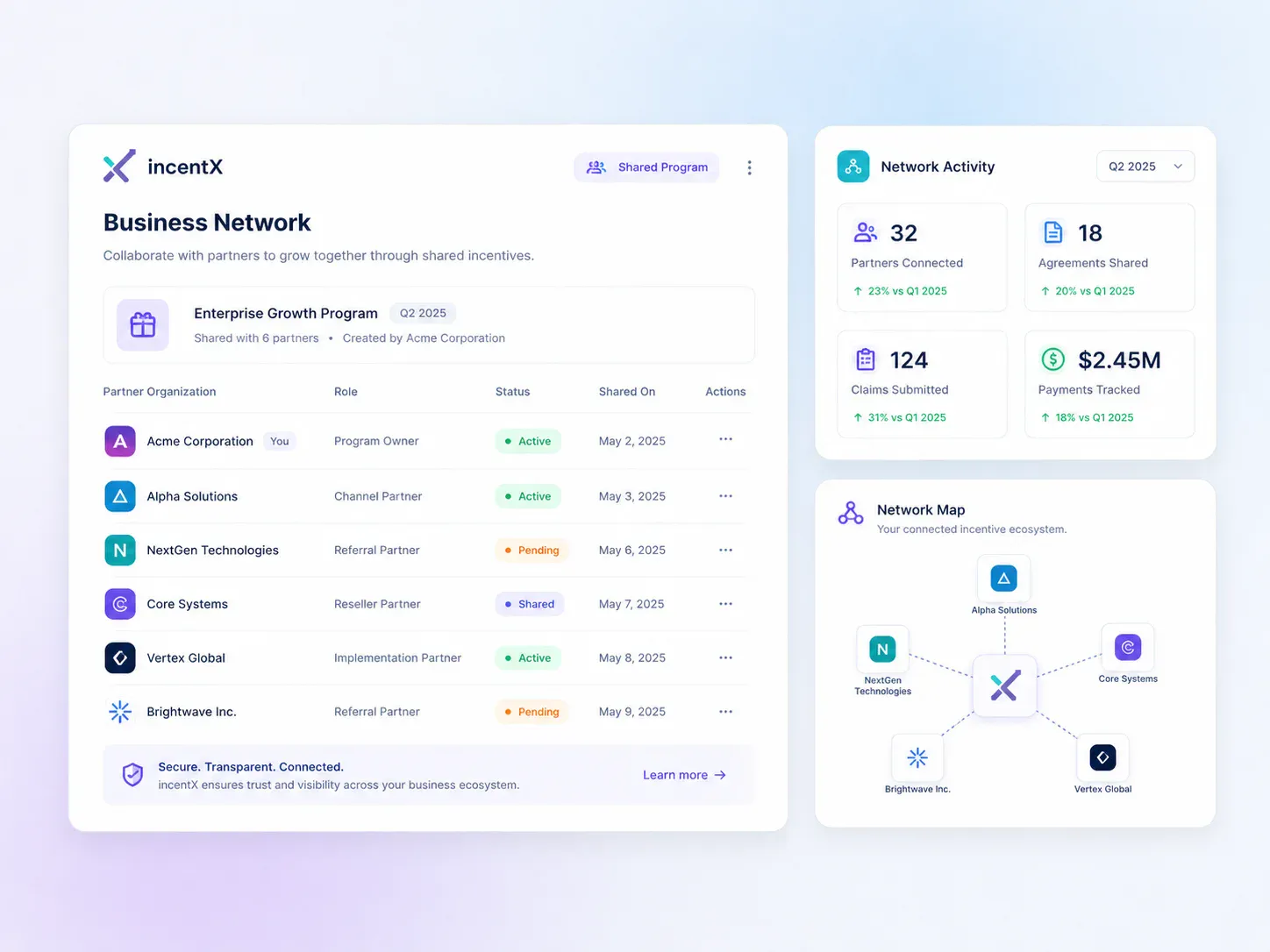
Unlimited users. You pay for transactions, not for seats.
Sales reps
Sales managers
Finance
Controllers
AR and deductions
Operations
Customer service
Partners
Distributors
Rep agencies
Auditors
Executives
+ anyone else who asks
No seat licenses, no viewer tiers, no read-only upsell.
FAQs
What buyers ask about incentX pricing, transaction counts, backfill, integrations, and how the platform compares with other incentive compensation tools.
What counts as a transaction?
For pricing, incentX counts each sales order, invoice, credit memo, purchase order, or AP invoice it pulls from your ERP as one transaction. Your yearly total sets your tier. Tiers run from 3,000 transactions on Starter to 240,000 on Pro Ultimate, and Enterprise covers higher volumes. Customer records alone don’t count.
What is backfill data?
Backfill means records from before your subscription that you load so a growth incentive or rebate has a prior period to measure against. incentX stores it as statistical values, not full transaction detail, and it’s excluded from the volume that sets your tier. Your subscription starts when you go live, whatever the date of your oldest record.
Who is incentX built for?
incentX is built for revenue, finance, and operations teams whose incentive pay no longer fits in spreadsheets, either because they run several incentive types or because transaction volume makes calculating by hand unworkable. Life sciences, wholesale distribution, food service, and FMCG are its primary industries. Because pricing is based on transaction volume, smaller companies can start on a lower tier.
Does incentX integrate with ERP and CRM systems?
Yes. Pre-built, two-way connectors cover ERPs including Oracle NetSuite, SAP, Microsoft Dynamics, and Sage, and incentX also integrates with Epicor Prophet 21 and with Salesforce, HubSpot, and Zoho CRM. ERP and CRM integrations are part of every plan, with no hidden integration fees. For any other system, the incentX team maps the fields through the open REST API during implementation.
How does incentX compare to other incentive compensation platforms?
Xactly, CaptivateIQ, Vistex, and Enable often come up when buyers compare incentX with other tools. incentX calculates commissions, rebates, royalties, chargebacks, and trade promotions on one platform, from the same ERP transactions. The pricing model differs too: you pay for ERP transaction volume, and seats and modules aren’t metered.
See what incentive management looks like when it runs on transaction truth
Bring a list of the incentive programs you run today, and we’ll show how incentX would handle each one from your ERP transactions.
Most incentive tools charge per seat, so adding a rep or inviting a partner means a bigger invoice. incentX charges by ERP transaction volume instead, so reps, finance, vendors, and partners can all have access without anyone counting seats.
Proof at scale
One price, every incentive program
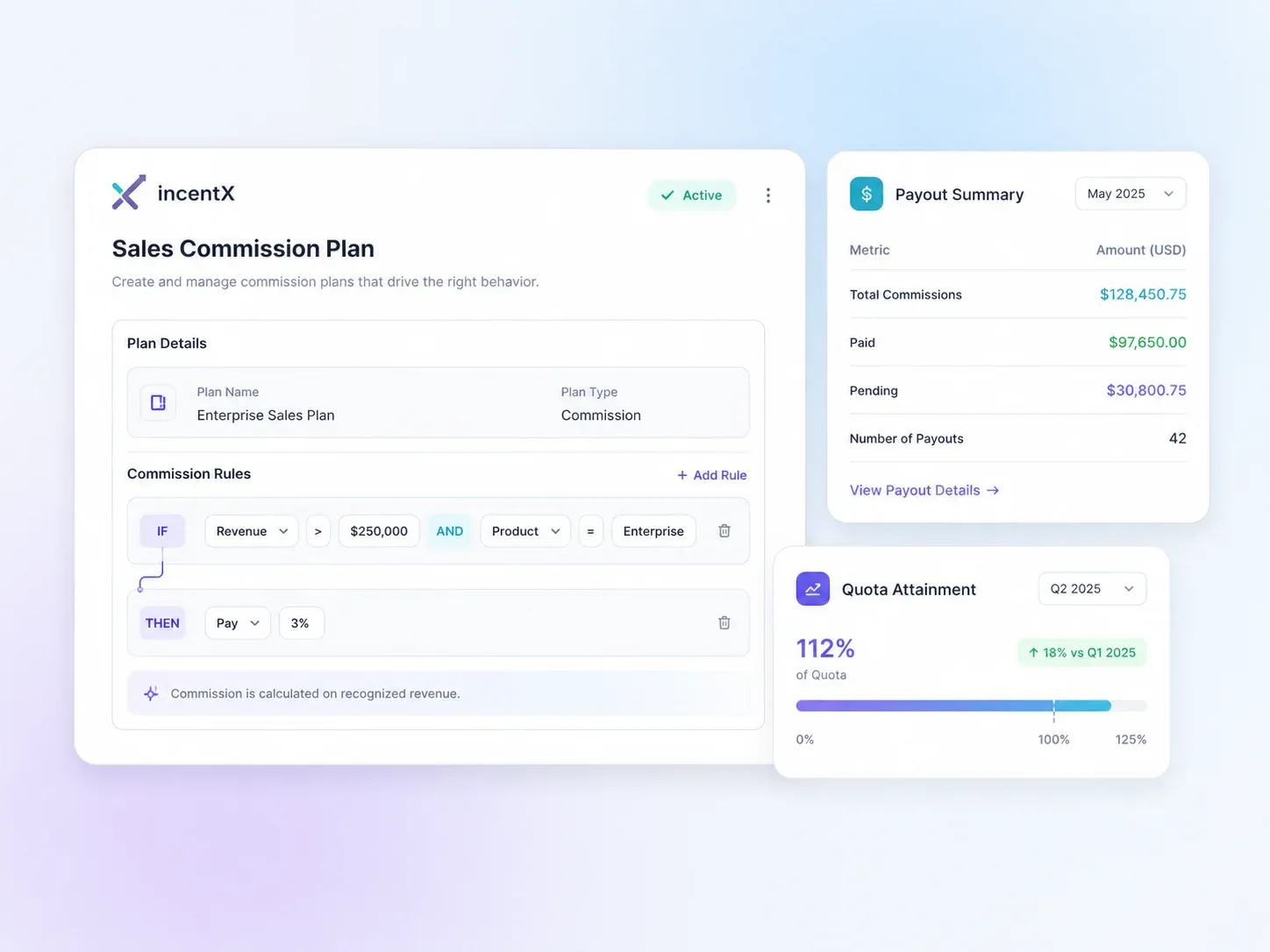
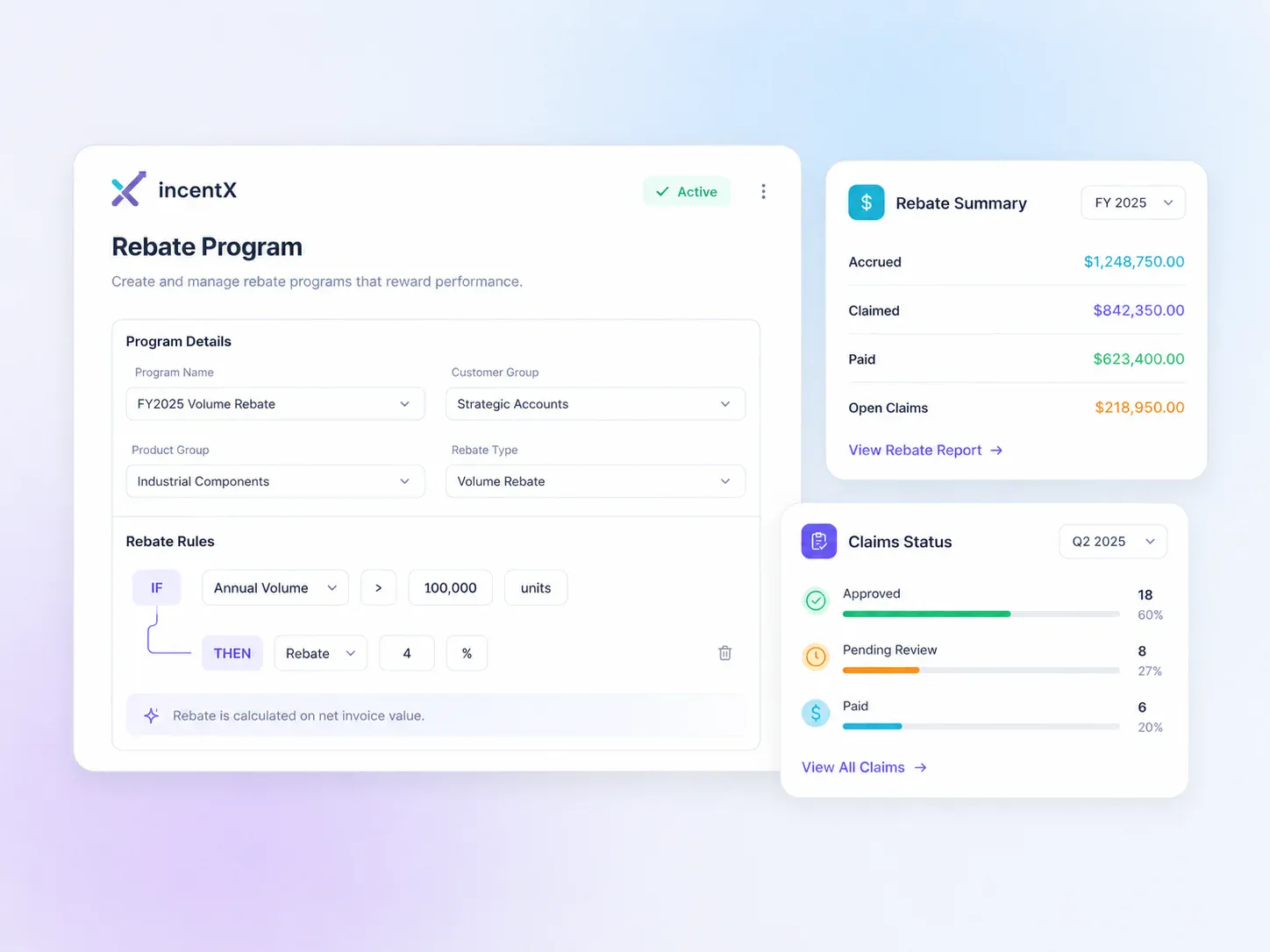
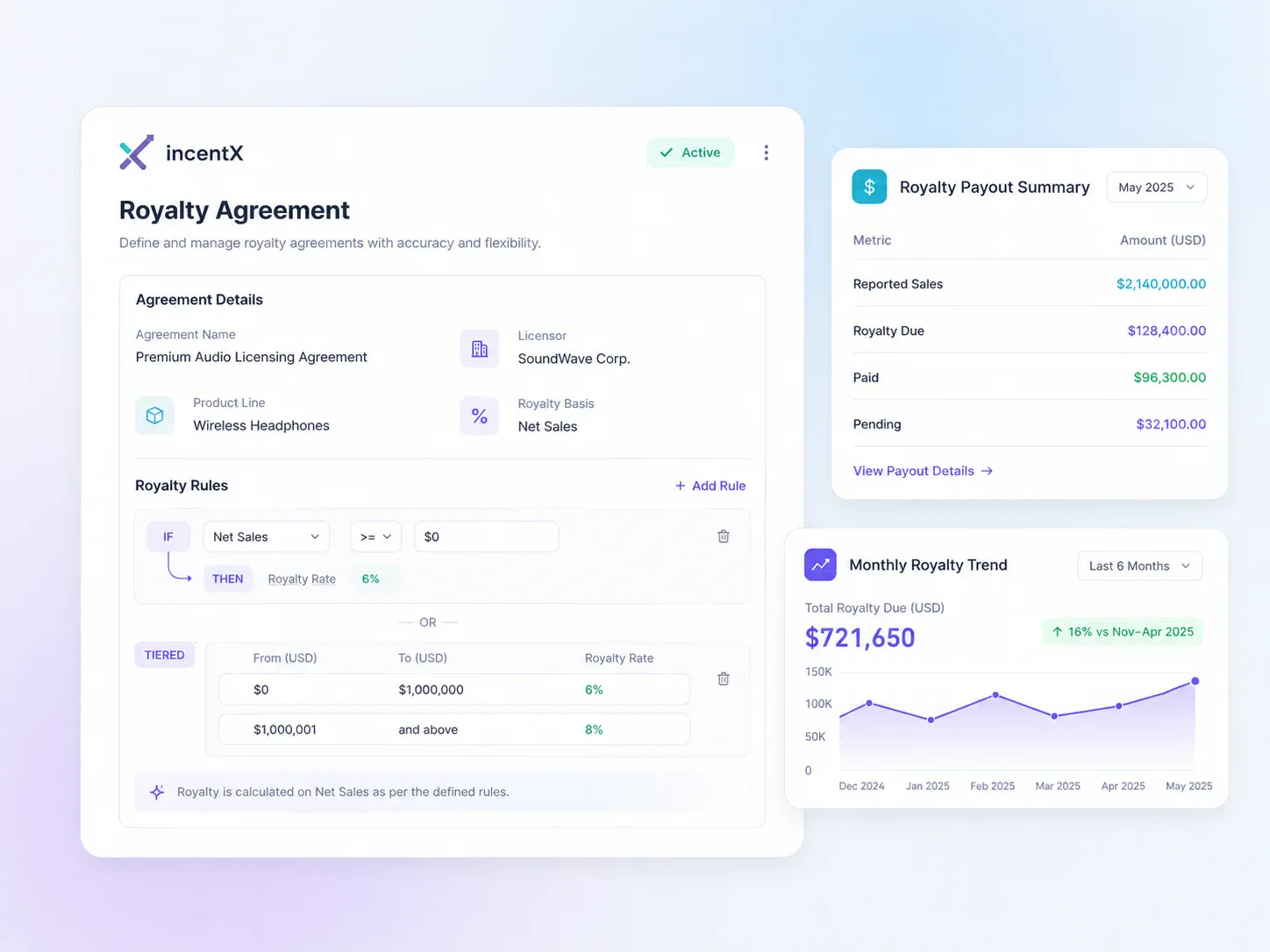
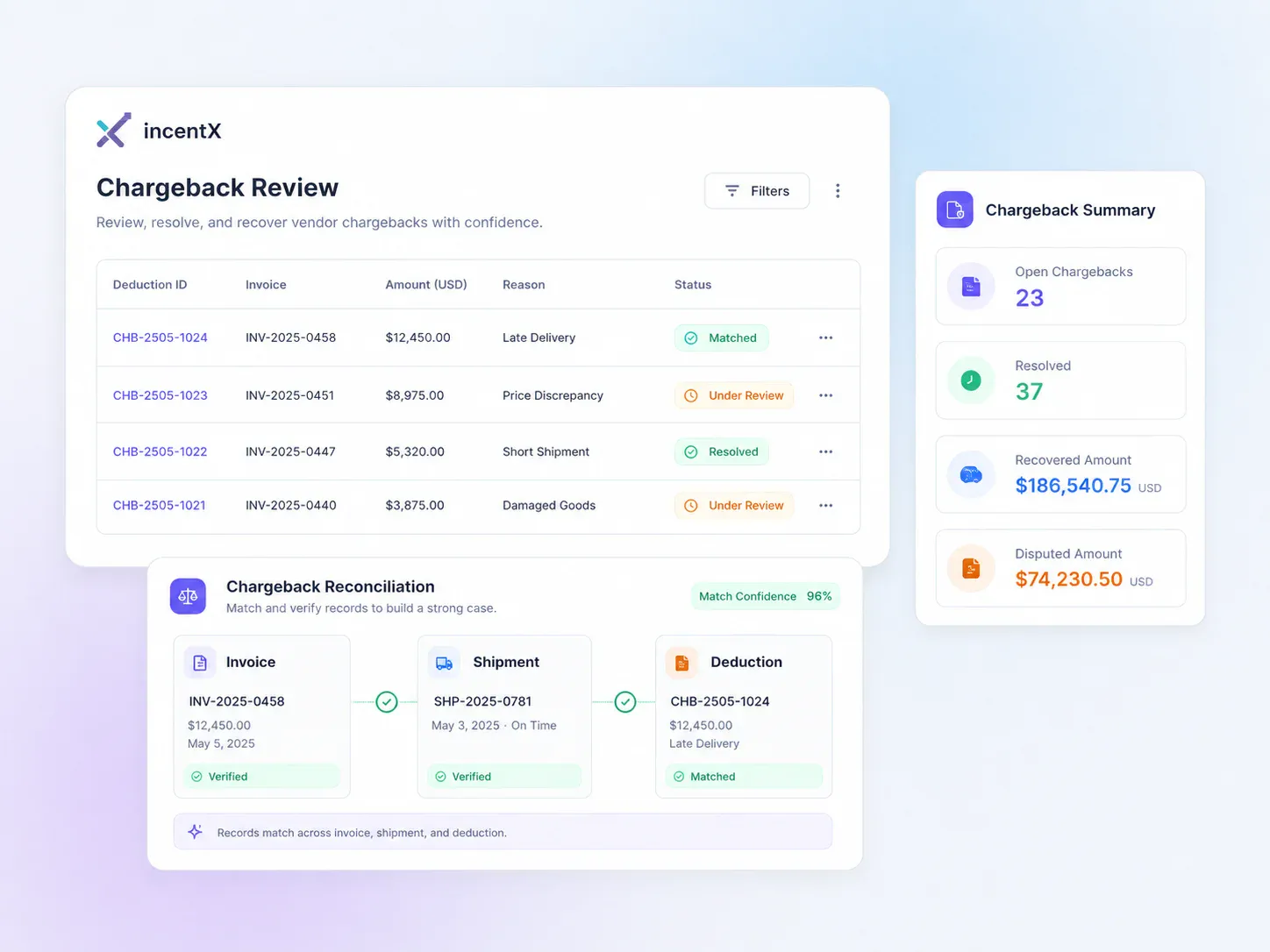
Commissions, rebates, royalties, chargebacks, billbacks, and trade promotions are all available from day one, so adding a rebate program after commissions leaves your price unchanged as long as you stay in the same tier. Price moves with ERP transaction volume alone, and each step up in tier lowers the cost per transaction.
One transaction-based system for every major incentive workflow
Most teams patch these processes together across spreadsheets, ERP reports, and point solutions. incentX brings them into one connected system built on real transaction data.
What customers have written about incentX on G2 and Capterra.
"incentX helps us align sales goals, create effective compensation programs, and automate compensation calculations. It is easy to use, user-friendly, and the support during implementation was excellent."
Verified User
Computer Software, Mid-Market company
"incentX is a great, easy-to-use tool for measuring incentives, commissions, royalties and more."
Verified User
Marketing and Advertising, Mid-Market company
"The incentX team is incredibly helpful and knowledgeable. Being able to see all commissions due has been an incredible time saver."
Verified Reviewer
Professional Training & Coaching company
See what your plan would cost
Tell us roughly how many ERP transactions you process in a year, and we’ll show you which tier fits and what it would cost.